Skip to content


Does Crashing at a Dangerous Intersection Help Prove Your Claim?
No. An intersection’s crash history does not determine who was at fault in any specific collision. Every claim depends on the evidence showing what each driver did in the moments before the crash, including traffic signals, right of way, and driver behavior.
St. Louis dangerous intersections like Forest Park Parkway, Kingshighway Boulevard, and Lindbergh Boulevard see serious crashes regularly because of the volume of traffic, complex turning movements, and congestion during peak hours. Drivers injured at these locations often assume that the intersection’s reputation strengthens their claim automatically.
That assumption is understandable but inaccurate. The fact that a particular intersection experiences frequent collisions does not prove what happened in any single crash.
Liability depends on the specific evidence, the applicable traffic laws, and the actions of each driver involved. Understanding how intersection crash investigations actually work helps injured people avoid common mistakes during the claims process.
Key Takeaways for St. Louis Intersection Car Accident Claims
- An intersection’s history of crashes does not establish fault in any individual collision, and each claim requires its own evidence showing how the accident occurred
- Left-turn crashes, red-light disputes, and failure-to-yield collisions each raise different factual questions about which driver had the right of way under Missouri traffic law
- Traffic camera footage, dashcam video, and witness statements are often critical in intersection cases because both drivers frequently claim they had the green light
- Missouri’s pure comparative fault system allows injured drivers to pursue compensation even when they bear partial responsibility, with the recovery adjusted based on the fault allocation
- Preserving evidence quickly matters more in intersection crashes than in many other accident types because traffic camera footage may be overwritten within days or weeks
Why Do Forest Park Parkway, Kingshighway, and Lindbergh Boulevard See So Many Crashes?
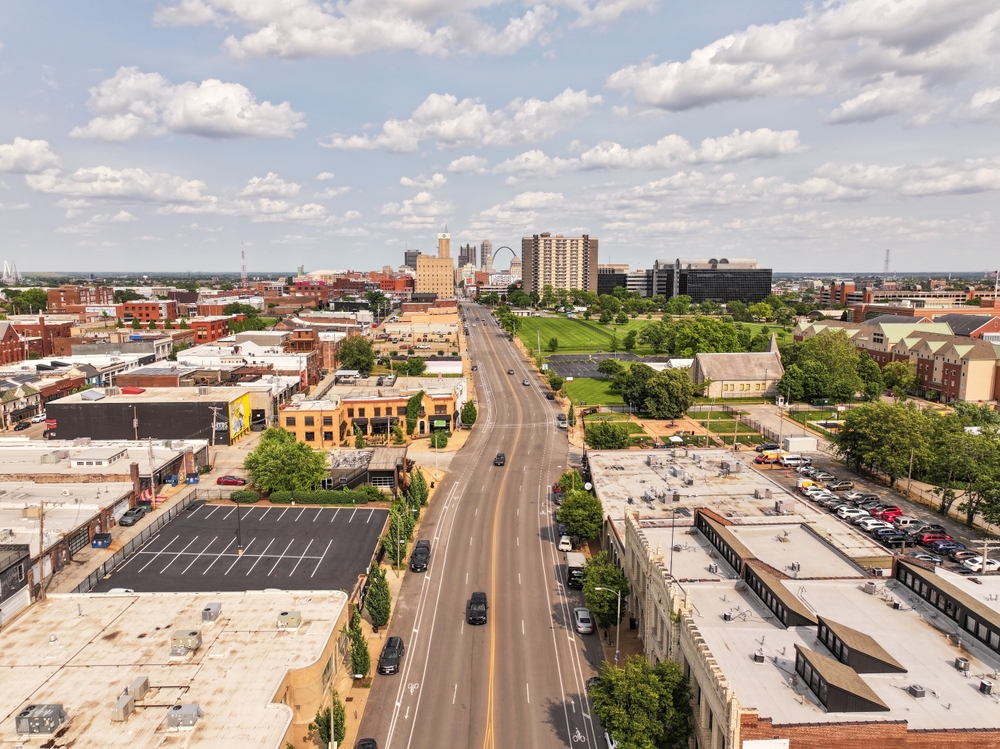
These corridors see frequent crashes because they combine high traffic volume, complex intersections, and competing demands from commuters, pedestrians, cyclists, and turning vehicles. Each road presents its own set of conditions that contribute to collision patterns.
Forest Park Parkway runs through the Washington University Medical Center area and connects to Interstate 64. That connection creates heavy commuter traffic alongside hospital visitors, university pedestrians, and buses.
The mix of fast-moving through traffic and frequent cross traffic produces conditions where left-turn and failure-to-yield crashes occur regularly.
Kingshighway Boulevard is one of the busiest north-south corridors in the city. It intersects with dozens of east-west streets, many controlled by traffic signals with heavy turning movements. Commuters, delivery vehicles, and pedestrians near Barnes-Jewish Hospital all compete for space at these intersections.
Lindbergh Boulevard runs through suburban St. Louis County, connecting commercial areas with residential neighborhoods. High speeds, frequent driveway access points, and intersections with limited visibility create conditions for rear-end crashes and left-turn collisions, particularly during evening rush hour.
Does a Busy Intersection Make the City or County Responsible?
A busy intersection does not make the municipality automatically responsible for crashes that occur there. Government entities maintain roads and traffic control devices, but liability for a specific crash requires evidence that a design defect, maintenance failure, or signal malfunction contributed to the collision.
In the vast majority of intersection crashes, liability falls on one or more drivers who violated a traffic law or failed to exercise reasonable care. The investigation focuses on driver behavior first.
What Types of Crashes Happen at Busy St. Louis Intersections?
Intersection crashes in St. Louis follow recognizable patterns based on the traffic movements each location generates. The type of crash affects how the investigation proceeds and what evidence matters most.
| Crash Type | Common Issue Investigated |
| Left-turn collision | Whether the turning driver yielded the right of way |
| Red-light crash | Which driver entered the intersection lawfully |
| Failure-to-yield collision | Whether one driver improperly entered traffic |
| Rear-end crash | Following distance, sudden stops, and driver attention |
| Multi-vehicle collision | Sequence of impacts and allocation of fault |
Each crash type involves different evidence and different legal questions. A left-turn collision at Kingshighway requires the investigation to determine whether the turning driver had an adequate gap in oncoming traffic. A rear-end crash on Lindbergh Boulevard focuses on following distance and whether the lead vehicle stopped unexpectedly.
Why Are Left-Turn Crashes So Common at These Intersections?
Left-turn crashes occur frequently at busy intersections because the turning driver must judge the speed and distance of oncoming traffic while also watching for pedestrians in the crosswalk. That judgment call becomes harder when traffic is heavy, visibility is limited, or the turning driver feels pressure from vehicles waiting behind them.
Missouri traffic law requires drivers making left turns to yield the right of way to oncoming vehicles. A driver who turns into the path of an oncoming vehicle that had the right of way generally bears fault for the resulting crash. The investigation examines signal timing, sight lines, and vehicle speeds to determine whether the turning driver yielded properly.
What About Red-Light Disputes?
Red-light crashes produce some of the most contested liability disputes because both drivers often claim they entered the intersection on green. Without independent evidence confirming which signal was active, the investigation becomes a credibility contest.
Traffic camera footage, when available, resolves these disputes quickly. Dashcam video from either vehicle or from a nearby driver may also capture the signal phase. Witness statements from pedestrians, passengers, or other drivers at the intersection provide additional support.
What Evidence Matters Most in a St. Louis Intersection Crash?
The evidence that matters most in an intersection crash establishes who had the right of way and what each driver did in the seconds before impact. That evidence is often more time-sensitive in intersection cases than in crashes on open highways.
Preserving footage and identifying witnesses within the first few days after the crash frequently determines whether the strongest evidence survives or disappears.
The following types of evidence frequently play a central role in St. Louis intersection crash investigations:
- Traffic camera footage from cameras mounted at signalized intersections that may capture signal phases, vehicle positions, and the moments leading up to the collision
- Dashcam video from the involved vehicles or from nearby drivers that provides an independent record of the crash
- The police crash report filed with the St. Louis Metropolitan Police Department or the Missouri State Highway Patrol, documenting the responding officer’s observations and any citations
- Witness statements from pedestrians, passengers, or other drivers who observed the crash from different vantage points
- Photographs of vehicle damage and the scene that preserve skid marks, debris fields, signal placement, and sight line conditions
Traffic camera footage is especially important because it often provides the clearest answer to disputed liability questions. However, many systems overwrite footage within a limited window. Requesting that footage promptly, often within days of the crash, may determine whether the most important evidence survives.
Why Is Accident Reconstruction Sometimes Necessary?
Accident reconstruction becomes necessary when the physical evidence and witness accounts do not clearly establish what happened. A reconstruction professional analyzes vehicle damage, impact angles, skid marks, and speed calculations to determine how the crash occurred.
Multi-vehicle intersection crashes are common candidates for reconstruction. When three or four vehicles are involved, the sequence of impacts matters. The first collision may have pushed one vehicle into another, and the drivers in the secondary impacts may bear no fault.
Reconstruction separates those events and assigns responsibility based on physical evidence rather than conflicting accounts.
How Does Missouri Law Handle Fault in Intersection Crashes?
Missouri’s pure comparative fault rule allows injured drivers to pursue compensation even when they bear partial responsibility for the crash. The recovery adjusts based on the percentage of fault assigned to each driver.
That rule matters in intersection crashes because insurers frequently argue that both drivers share some degree of fault. Maybe the injured driver was going slightly over the speed limit. Maybe they entered the intersection a moment after the light changed.
Even small contributions to the crash give the adjuster a basis to reduce the payout. The investigation focuses on establishing the specific actions of each driver rather than relying on assumptions about who “usually” causes a particular type of crash. Evidence showing that one driver ran a red light, failed to yield, or was distracted weighs more heavily than general assumptions about intersection behavior.
What If Both Drivers Claim They Had the Green Light?
Independent evidence resolves conflicting accounts. When both drivers claim the green light, the investigation turns to traffic camera footage, dashcam video, witness statements, and the physical evidence at the scene. Signal timing records from the Missouri Department of Transportation or the city’s traffic engineering department may also help establish which signal was active.
Without independent evidence, these disputes become difficult to resolve. That reality underscores why preserving footage and identifying witnesses immediately after an intersection crash matters more than in many other types of collisions.
When Does a St. Louis Intersection Crash Need a Lawyer?
An intersection crash may need a lawyer when the evidence that proves what happened is at risk of disappearing. Traffic camera systems overwrite footage on short cycles. Witnesses who saw the signal phase from a crosswalk or adjacent lane move on and become harder to locate. Dashcam footage from passing vehicles gets recorded over within days.
An attorney’s first priority in an intersection case is preserving that time-sensitive evidence. Sending formal preservation requests to the agencies that operate traffic cameras, identifying and contacting witnesses before their memories fade, and obtaining signal timing records from the traffic engineering department all happen in the first days and weeks after the crash.
Several factors commonly signal that an intersection crash claim has become more complex than it first appeared:
- Both drivers dispute fault, and no traffic camera footage or dashcam video provides a clear answer without further investigation
- The crash involved multiple vehicles, making the sequence of impacts and signal timing at the moment of each collision difficult to untangle
- Signal timing or intersection design may have contributed to the conditions that caused the crash, raising questions beyond simple driver error
- Injuries are serious enough to involve ongoing treatment, and the claim’s value depends on a thorough liability investigation before any settlement discussion begins
A St. Louis car accident lawyer focuses the investigation on the physical and electronic evidence that resolves disputed liability at busy intersections.
How Do Intersection Conditions Affect the Investigation?
Intersection conditions such as visibility, signal timing, lane markings, and pedestrian activity all factor into how the investigation determines what happened. Two crashes at the same intersection may involve completely different conditions depending on the time of day, weather, and traffic volume.
Rush-hour congestion along Kingshighway creates conditions where drivers make left turns through shrinking gaps in traffic. Morning sun glare on eastbound Forest Park Parkway may obstruct a driver’s view of a red signal. Evening traffic on Lindbergh Boulevard produces rear-end crashes when drivers follow too closely in stop-and-go conditions.
These conditions do not excuse negligent driving, but they provide context that helps the investigation explain how the crash occurred. Photographs taken at the scene that capture sun position, signal visibility, and traffic density become valuable evidence for establishing what each driver faced at the moment of the collision.
FAQs for St. Louis Intersection Car Accident Claims
Does a red-light ticket automatically prove fault in a civil claim?
No. A traffic citation reflects the officer’s assessment at the scene, but it is not a binding determination of civil liability. The cited driver may contest the ticket, and the civil claim requires its own evidence showing how the crash occurred. However, a citation strengthens the injured person’s position by supporting their version of events.
How long is intersection camera footage kept?
Retention periods vary by system and jurisdiction. Some St. Louis traffic cameras retain footage for only a few days before the system overwrites it. Requesting the footage promptly, ideally within the first week after the crash, gives the best chance of preserving it. An attorney sends a formal preservation request to the appropriate agency.
What if there were no witnesses to the intersection crash?
Intersection crashes without witnesses rely more heavily on physical evidence. Vehicle damage patterns, skid marks, debris location, and signal timing data help reconstruct what happened. Dashcam footage from passing vehicles and surveillance cameras on nearby businesses may also fill the gap.
What if I return to the intersection to take photographs after the crash?
Returning to photograph the intersection at a similar time of day and under similar conditions may help document visibility, signal placement, lane markings, and traffic patterns. These photographs provide context for the investigation, though they do not replace evidence from the day of the crash itself.
What if the intersection has a known design issue?
A design issue such as poor sight lines, confusing lane markings, or inadequate signal timing may contribute to a crash, but proving that the design caused the specific collision requires engineering analysis. Government entities that maintain roadways may have certain legal protections, and claims against them involve additional procedural requirements and shorter deadlines.
Understanding Your Options After a St. Louis Intersection Crash
An intersection crash at a busy St. Louis location raises factual questions that the intersection’s reputation alone does not answer. The evidence from the specific crash, including footage, witness accounts, physical damage, and applicable traffic laws, determines how liability is established and what compensation may be available.
Walner Law helps drivers injured at St. Louis intersections investigate the crash and preserve time-sensitive evidence. Contact Walner Law or call 314-300-0000 to discuss your situation in a free consultation.